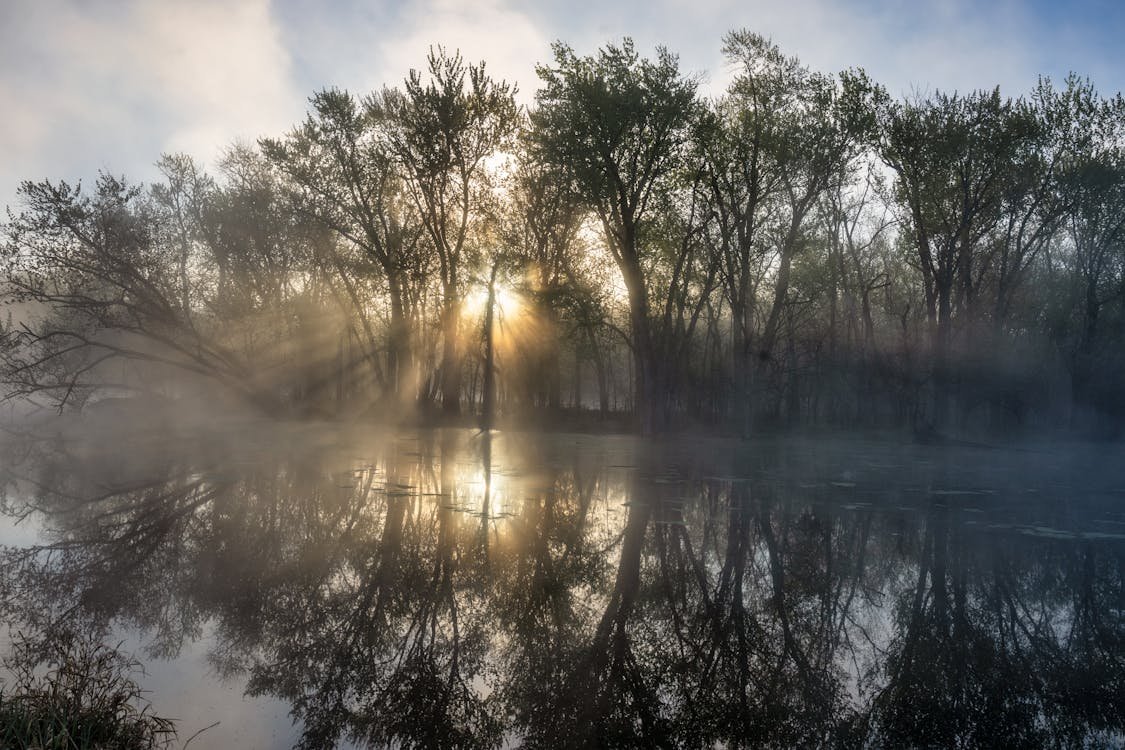
There was a time when it was easy. You could feel it — in worship, in prayer, in the quiet before bed. Something real, something warm, something close. You did not have to work for it. God was just… there.
And now He is not. Or at least it feels that way.
The songs do not stir you the way they used to. The Bible feels like words on a page instead of a voice speaking to your heart. You bow your head and the words go up, but nothing seems to come back down. And the hardest part is not the silence itself — it is remembering what it used to feel like, and wondering what happened.
You Are Not the First to Ache Like This
This kind of spiritual dryness — where God feels distant even though you have not walked away — is one of the loneliest experiences a believer can face. It is different from doubt. You are not questioning whether God exists. You are just standing in the place where He used to feel close and finding it empty.
It can bring a quiet kind of shame with it. You look at other people who seem to be overflowing with joy in their faith, and you wonder what they have that you do not. You wonder if you did something wrong. If you missed a turn somewhere. If maybe this is your fault.
It is not.
The feeling of God’s absence is not evidence that He has left. And the people who seem to have it all together? Many of them have stood in this exact same place. Some of them are standing in it right now.
This is one of the oldest aches in the story of faith. And one of the most honest men in all of Scripture gave it words thousands of years ago.
A Soul That Pants for Water
Psalm 42 opens with an image so vivid you can feel it in your chest:
“As the hart panteth after the water brooks, so panteth my soul after thee, O God. My soul thirsteth for God, for the living God: when shall I come and appear before God?” — Psalm 42:1–2 (KJV)
A deer, desperate for water. Not casually thirsty. Not mildly inconvenienced. Panting. Aching. Searching for something it cannot survive without.
That is what the psalmist feels. Not a lack of belief — a lack of experience. He believes in God. He longs for God. He just cannot find the stream he used to drink from.
And then comes a line that might be the most heartbreaking verse in the entire psalm:
“My tears have been my meat day and night, while they continually say unto me, Where is thy God?” — Psalm 42:3 (KJV)
Where is thy God? That question is not only coming from the people around him. It is coming from inside him. It is the question that plays on repeat in the quiet hours: Where did You go? Why can’t I feel You? What happened to what we had?
You can read the full psalm at Bible Gateway — Psalm 42 (KJV).
What the Psalmist Does Next
Here is the part that changes everything. In the middle of his grief, the psalmist does something remarkable. He talks to his own soul:
“Why art thou cast down, O my soul? and why art thou disquieted in me? hope thou in God: for I shall yet praise him for the help of his countenance.” — Psalm 42:5 (KJV)
He does not deny what he is feeling. He does not scold himself for the dryness. He asks himself a question — why are you cast down? — and then he gives himself an answer: Hope thou in God.
Not hope in a feeling. Not hope in a return to the way things were. Hope in God Himself — the person, not the experience.
And then four words that carry the weight of the entire psalm: I shall yet praise him.
Yet. That word is everything. It means this is not the end of the story. It means the dryness is a season, not a sentence. It means that even though the psalmist cannot feel God right now, he knows — with a certainty that does not depend on feeling — that praise is coming. That the stream will flow again. That what feels like absence is not the final word.
The Dryness Does Not Mean What You Think It Means
When you lose the feeling of God’s presence, your first instinct is to assume something has gone wrong. And sometimes that instinct sends you searching for the sin, the failure, the thing you must have done to push God away.
But here is what Scripture reveals again and again: some of the deepest spiritual growth happens in the driest seasons. Not despite the dryness — in it.
The vine is pruned so it can bear more fruit. The seed is buried in darkness before it breaks through the soil. The night comes before the morning. And sometimes God allows a season of spiritual stillness not because He is displeased, but because He is drawing you deeper — past the feelings, past the experiences, past the things you thought you needed — to a place where your faith rests on Him alone.
The lower we bow — the deeper we feel that we have nothing to hope in but His mercy — the nearer He draws. That is not a punishment. That is an invitation.
And there is another verse in this psalm that often gets missed:
“Yet the LORD will command his lovingkindness in the daytime, and in the night his song shall be with me, and my prayer unto the God of my life.” — Psalm 42:8 (KJV)
Even in the night. Even when you cannot feel it. His lovingkindness is being commanded on your behalf. His song is still with you. You may not hear it right now. But it has not stopped playing.
What to Do in the Dry Season
If you are in this place right now — if God feels far away and you do not know how to get back — here are a few things to hold onto:
1. Stop chasing the feeling. The goal of faith is not to feel a certain way. The goal is to know a certain Person. Feelings come and go. They always have. But the God who was with you in the mountaintop season is the same God who is with you in the valley. You do not have to manufacture the feeling for it to be real.
2. Talk to your own soul. The psalmist did this, and you can too. When the dryness tells you that God has left, speak back: “Why are you cast down, O my soul? Hope in God. I shall yet praise Him.” You are not lying to yourself. You are reminding yourself of what is true even when it does not feel true.
3. Stay in the Word even when it feels dry. The Bible is not less true on the days it does not stir you. Keep reading. Keep showing up to the page. Sometimes the Word works like rain on hard ground — it takes time to soak in. But it is soaking in, even when you cannot tell.
4. Remember what He has done. The psalmist does this in verse 4: “I had gone with the multitude… to the house of God, with the voice of joy and praise.” He reaches back to what he knows was real. You can do the same. There was a time when God met you. That was not imaginary. That same God is still here.
5. Give yourself permission to ache. You do not have to pretend the dryness does not hurt. God is not offended by your honesty. The entire psalm is proof of that. Bring Him the ache. Bring Him the tears that have been your meat day and night. He can hold all of it.
If you want a place to sit with Scripture anytime, the free Bible.com app lets you save passages and return to them whenever you need to.
A Prayer for Right Now
God, my soul is panting for You and coming up dry. I remember what it used to feel like to be close to You, and I miss it. I miss You.
I do not understand why this season feels so empty. But I am choosing to trust what I know over what I feel. I know You have not left me. I know Your lovingkindness is still being commanded over my life, even in the night. I know that I shall yet praise You — even if I cannot feel that praise forming in me right now.
Meet me here, Lord. Not where I think I should be. Here — in the dry place, in the ache, in the middle of the question. I am not going anywhere. I will wait for You.
In Jesus’ name, amen.
If you are experiencing prolonged feelings of emptiness, numbness, or disconnection, please consider reaching out to a licensed counselor. Mind on Peace is a place for encouragement and Scripture — not a substitute for professional support. You can find affordable, faith-based counseling through Faithful Counseling or Open Path Collective.